
If you keep asking, how to get more visibility for my business, but you’re already posting, networking, and saying yes to opportunities, the problem usually is not effort. It’s misalignment. You do not need to be louder. You need your message, presence, and follow-through to work together so people actually understand your value and know what to do next.
That matters because visibility is not the same as attention. A spike in views can feel exciting and still produce nothing. Real visibility creates recognition, trust, conversations, referrals, and momentum. If your business is getting seen but not remembered, or noticed but not chosen, there is a gap worth fixing.
How to get more visibility for my business without doing more noise
A lot of business advice makes visibility sound like a volume game. Post more. Go live more. Network more. Comment more. Show up everywhere. That approach can work for a short season, but for many founders, especially women building with intention, it quickly turns into performance without payoff.
The stronger question is not, how can I do more? It’s, what makes people understand me faster, trust me sooner, and refer me more confidently?
Visibility grows when four things are working together: your story is clear, your presence is consistent, your relationships are active, and your business has a way to carry conversations forward. Miss one of those, and your growth starts leaking.
Your story has to be easier to repeat
Most founders are too close to their own work. They know the details, the process, the passion behind it. But the market responds to clarity, not complexity. If someone cannot explain what you do in one or two sentences after meeting you, your visibility problem starts there.
This is where many smart, capable women get overlooked. Not because they lack value, but because their value is buried under language that is too broad, too cautious, or too polished to feel memorable. If your message sounds nice but says very little, it is not helping you.
A stronger story does three things. It makes clear who you help, what shifts because of your work, and why your approach is different. Not cute. Not vague. Clear. When your positioning sharpens, every room works better for you. Every introduction gets stronger. Every piece of content carries more weight.
Visibility is built through recognition, not random activity
You do not need a bigger presence everywhere. You need a recognizable presence in the places that matter. There is a difference.
If your audience spends time on LinkedIn, but you are forcing yourself to create endless short-form video because someone told you that is the only way to grow, you may be building stress instead of visibility. If in-person conversations convert better for you than daily posting, that matters too. Your visibility strategy has to match your strengths, your buyers, and your business model.
For a service-based founder or executive, consistency often beats creativity. People need to see the same core message from you more than once. They need to connect your name with a specific kind of result. Repetition is not boring when it creates recognition. It is branding.
That means your content, live conversations, speaking opportunities, podcast interviews, event appearances, and referrals should sound like they belong to the same business. Not five different versions of who you are depending on the platform.
Why your business may still feel invisible
Sometimes the issue is not that no one sees you. It is that people see you in fragments.
They watch your content, but they do not know your offer. They meet you at an event, but they cannot tell whether you are premium or entry level. They like you, but they are unclear on what to refer you for. They hear your story, but they do not see a path to work with you.
This is where visibility starts feeling emotionally exhausting. You are putting yourself out there, yet your effort is not translating into opportunity. That disconnect creates self-doubt fast. It can make you question your message, your market, and even your own capability.
But fragmented visibility is a strategy problem, not a personal failure.
Relationships are your multiplier
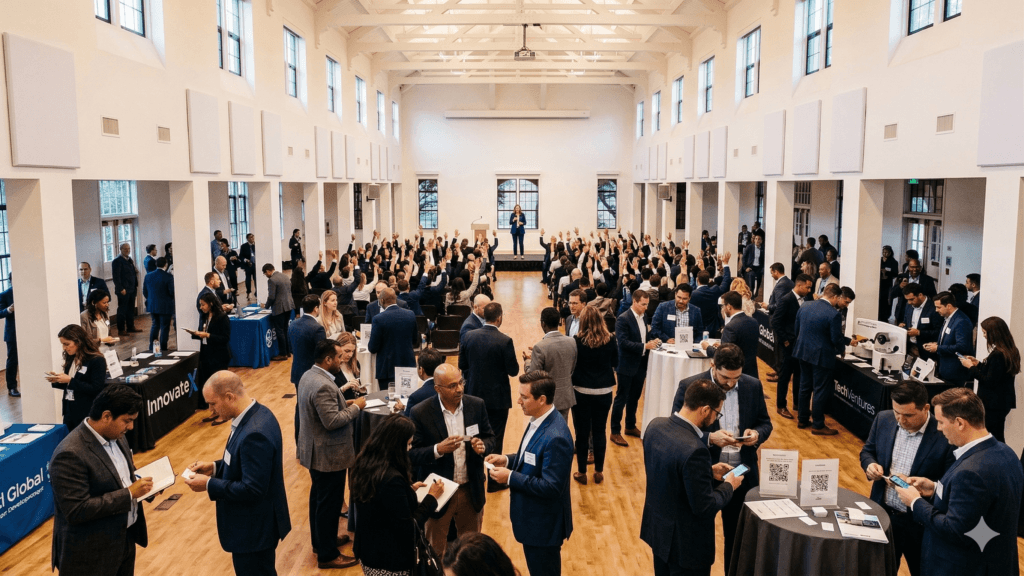
Founders often think visibility lives in marketing alone. It does not. Some of your best opportunities will come through rooms, referrals, collaborations, and conversations where trust moves faster than content ever could.
That is why relationship-building cannot be treated like an afterthought. It is not just about meeting more people. It is about helping the right people understand your work well enough to remember you, mention you, and open doors for you.
There is also a trade-off here worth naming. Broad audience growth can bring reach, but depth in the right rooms often brings revenue faster. A room full of aligned peers, decision-makers, and connectors can change your business more than another month of posting into the void.
When women founders are in spaces that sharpen how they speak about their value and practice real connection in real time, their visibility changes. Not because they magically become different people, but because they become more precise, more confident, and more referable.
Follow-up is where most visibility goes to die
You can have a great introduction, a strong panel appearance, a meaningful event conversation, or a solid burst of content, then lose the opportunity because nothing carried it forward.
This is the part people skip because it is less glamorous than being seen. But momentum is operational. If someone discovers you today, what happens next? Do they know where to go? Do you have a way to continue the conversation? Are leads organized? Are opportunities being tracked? Are warm connections nurtured, or just admired and forgotten?
Visibility without a system creates a false sense of progress. You feel busy and hopeful, but your business does not compound. Attention came in, but nothing held it.
A simple follow-up rhythm can change more than a dramatic rebrand. A clear next step, a clean offer pathway, and consistent relationship management turn visibility into actual business development.
How to get more visibility for my business in a way that converts
Start by tightening your message. If your business had to be understood in thirty seconds, would that version be strong enough to earn a second conversation? If not, work there first. Better visibility begins with better language.
Then look at your current channels with honesty. Where are real conversations happening? Where are qualified people responding? Where have introductions, referrals, or sales actually come from? You are not looking for the most popular tactic. You are looking for the channels that produce movement.
Next, strengthen the bridge between being seen and being chosen. Your audience should be able to recognize what you do, who it is for, and how to take the next step. That may mean refining your bio, your talking points, your offer descriptions, or your event follow-up. Small changes in clarity can create big changes in conversion.
After that, invest in rooms that improve both visibility and skill. Not every networking event will do that. Not every conference will either. Some spaces give you inspiration and very little implementation. Others help you practice the exact skills that make visibility work: positioning, presence, connection, and lead management. That difference matters.
This is one reason intimate, working experiences often outperform bigger events for founders who are serious about growth. You get feedback in real time. You hear how your message lands. You build relationships with more depth. You leave with language and systems you can actually use. The SPRINT Experience was built around that reality, because women in business do not need more generic encouragement. They need momentum they can apply.
Finally, stop measuring visibility only by public metrics. Likes are not the whole story. Better signs include stronger introductions, more aligned inquiries, cleaner referrals, faster trust, and a growing ability to walk into a room and be understood.
That is the kind of visibility that holds. It is not about becoming the loudest brand in the room. It is about becoming the clearest, the most connected, and the easiest to trust.
If your business feels harder to grow than it should, do not assume you need more hustle. Sometimes the next level comes from being seen in a way that finally matches your actual value. When that happens, visibility stops feeling like a performance and starts working like an asset.